

No products in the cart.
Product Information
- Embroidery Fabric: Real silk fabric / simulated silk fabric (non-elastic, suitable for expressing this work).
- Embroidery Thread: Real silk, plant-dyed.
- Craftsmanship: Yiran Embroidery Method, purely handmade.
- Thread Diameter: 1/4 thread – 1/16 thread.
- Stitch Density: ≥120 stitches per square centimeter.
Color Layers: Main body superimposed colors ≥5 layers.
Frame: Tulip Tree solid wood (imported American wood), front width 5.4cm, hidden mortise-and-tenon structure; the frame can also be exclusively nailed according to your needs; the frame is handmade, and actual condition may differ slightly from the illustrated effect.
Backboard: Solid camphor wood, universal, thickness 0.9cm; fixing method: recessed stainless steel screws.
Mat Board: Real silk damask fabric, padded mat board, heat-pressed and formed; or paper mat board, to meet the matching effect.
Glass: Anti-reflective glass, with light transmittance and UV protection both at 98%
Packaging Box: Standard is a specific paper box; optional aluminum alloy case (not applicable in some countries/regions such as the United States)
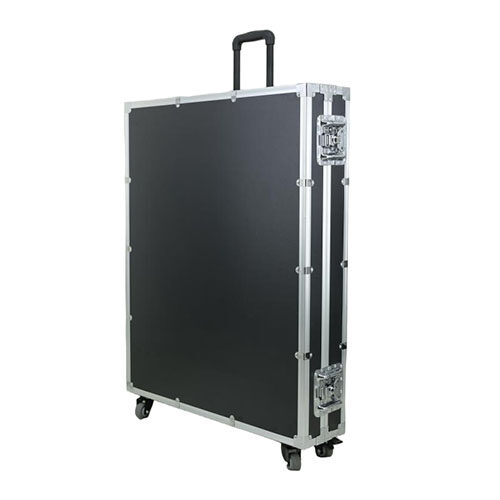 Aluminum Alloy Wheeled Trolley Case | 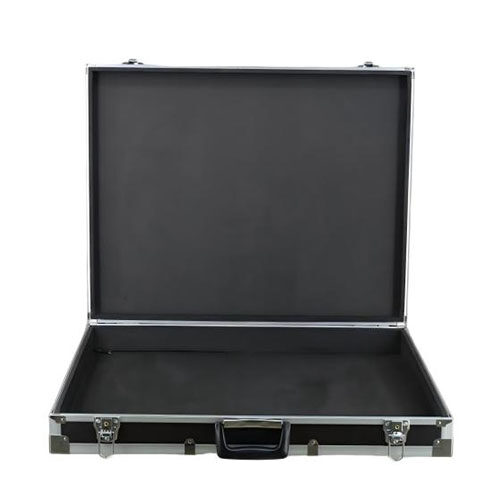 Interior Effect Lined with Black Pearl Cotton |
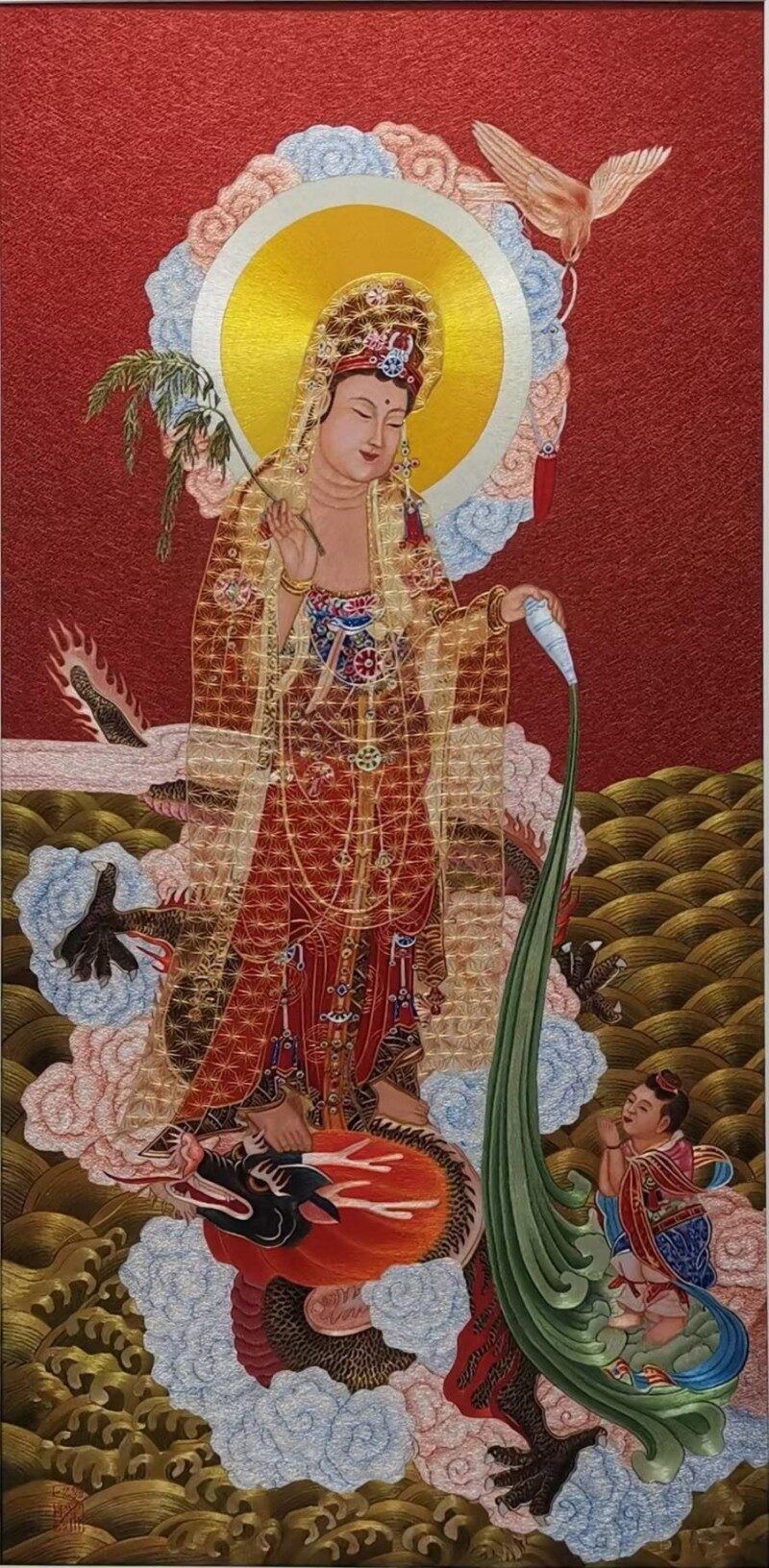
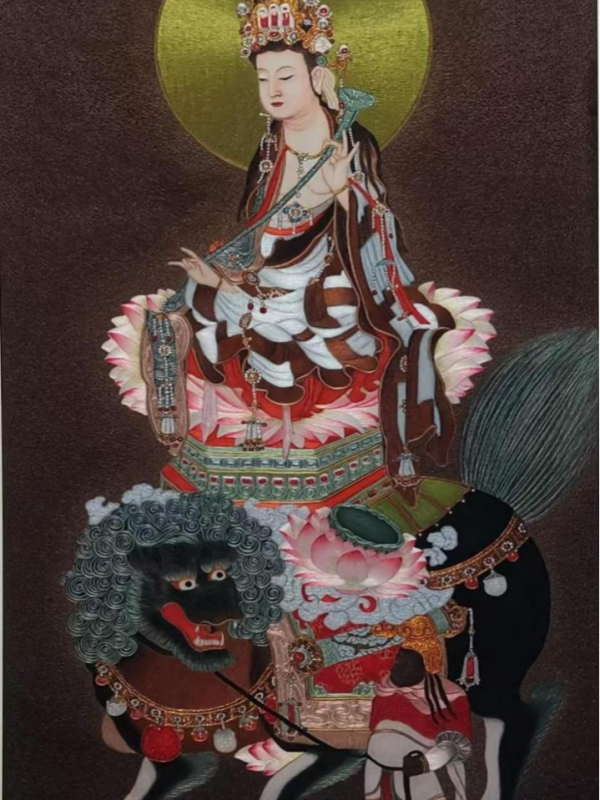
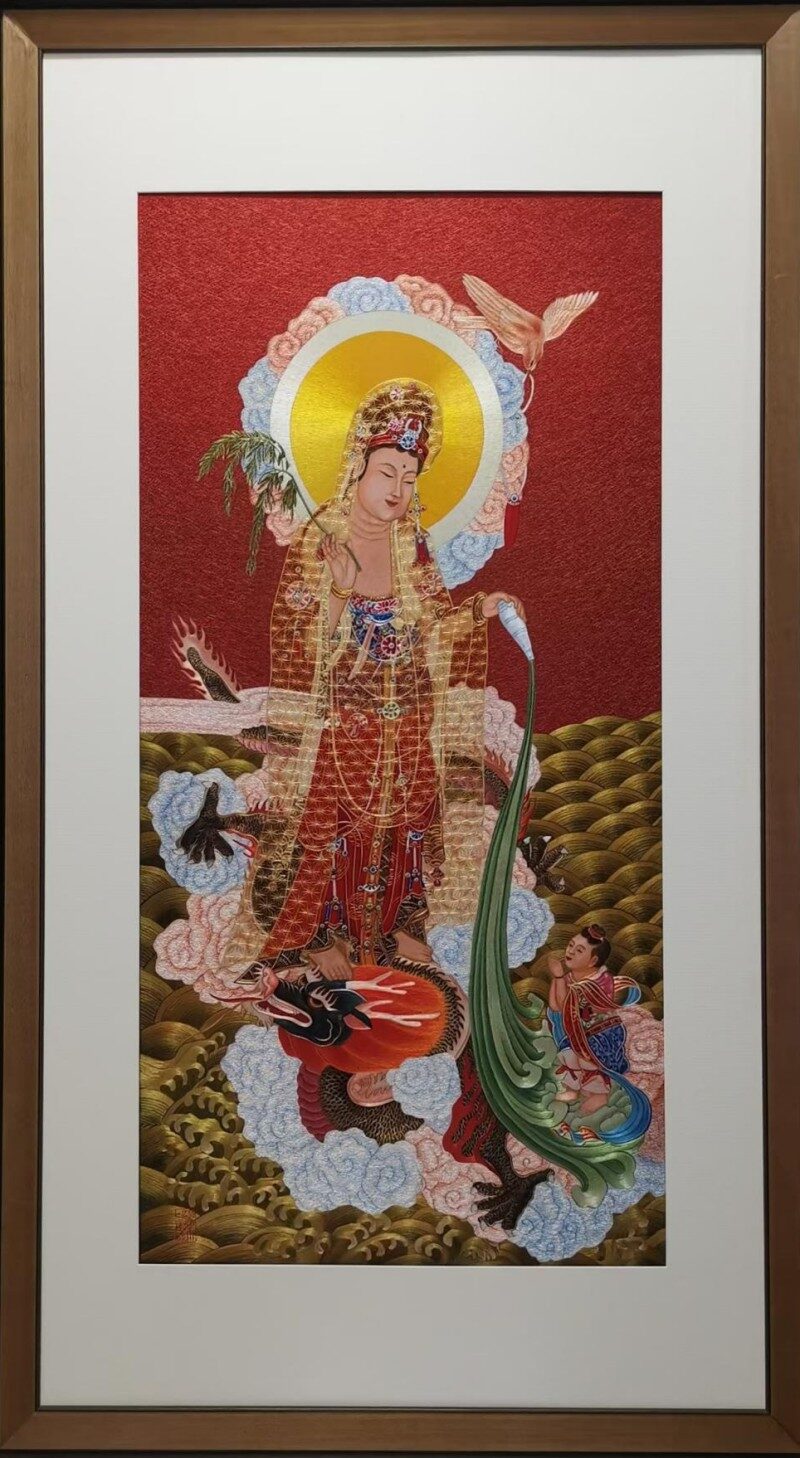
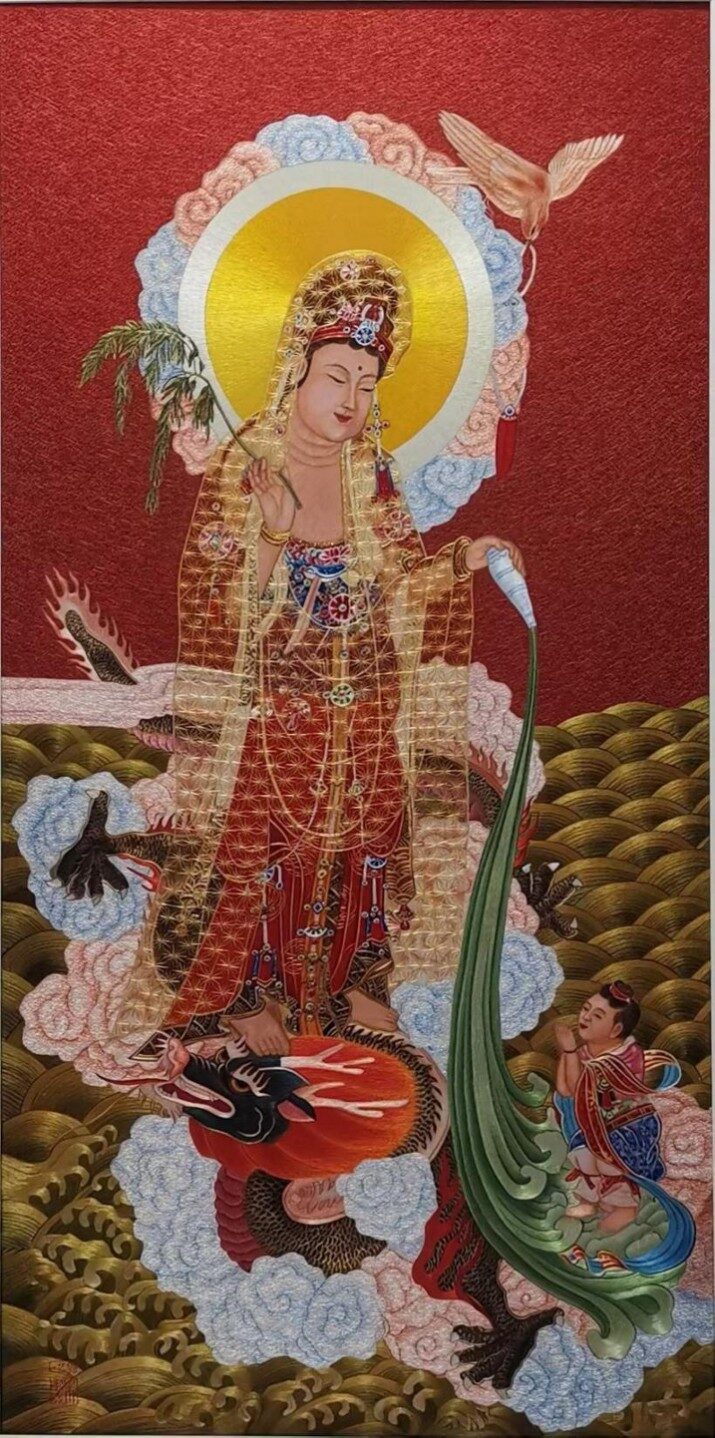
“Dragon-Riding Guanyin” Size: 50x100cm
Embroidered by National-Level Master Zhu Juncheng Studio Yiran Embroidery Method
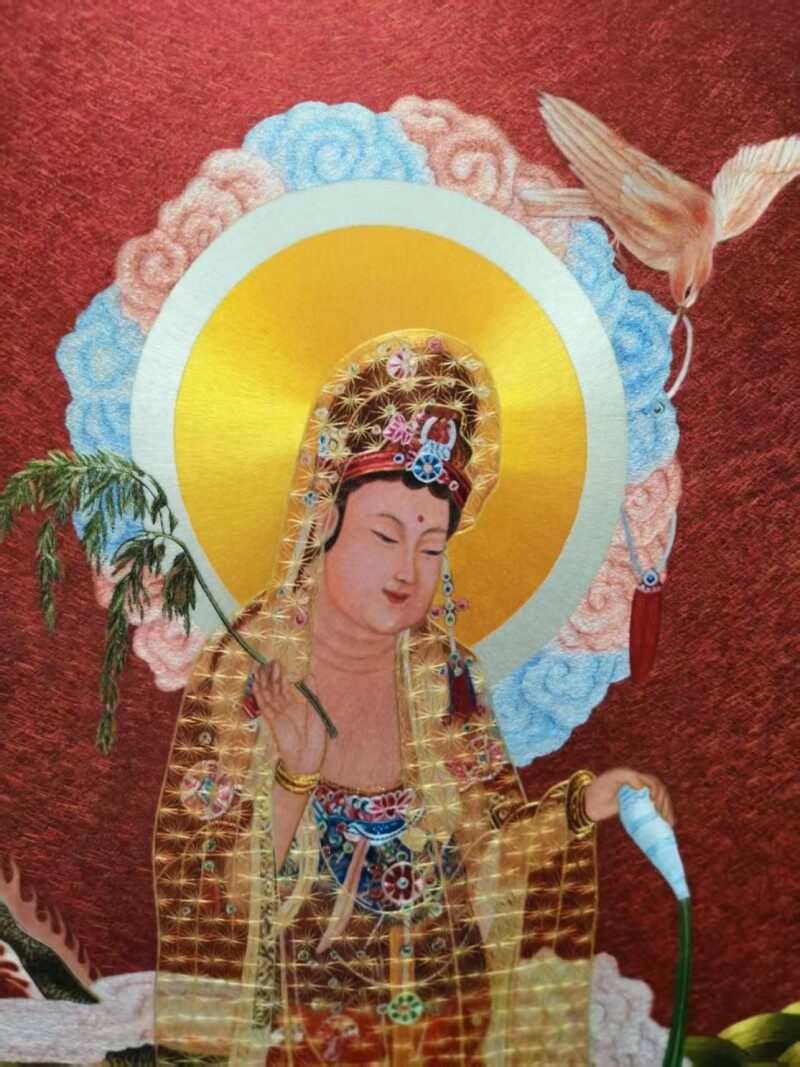
“Dragon-Riding Guanyin” Detail
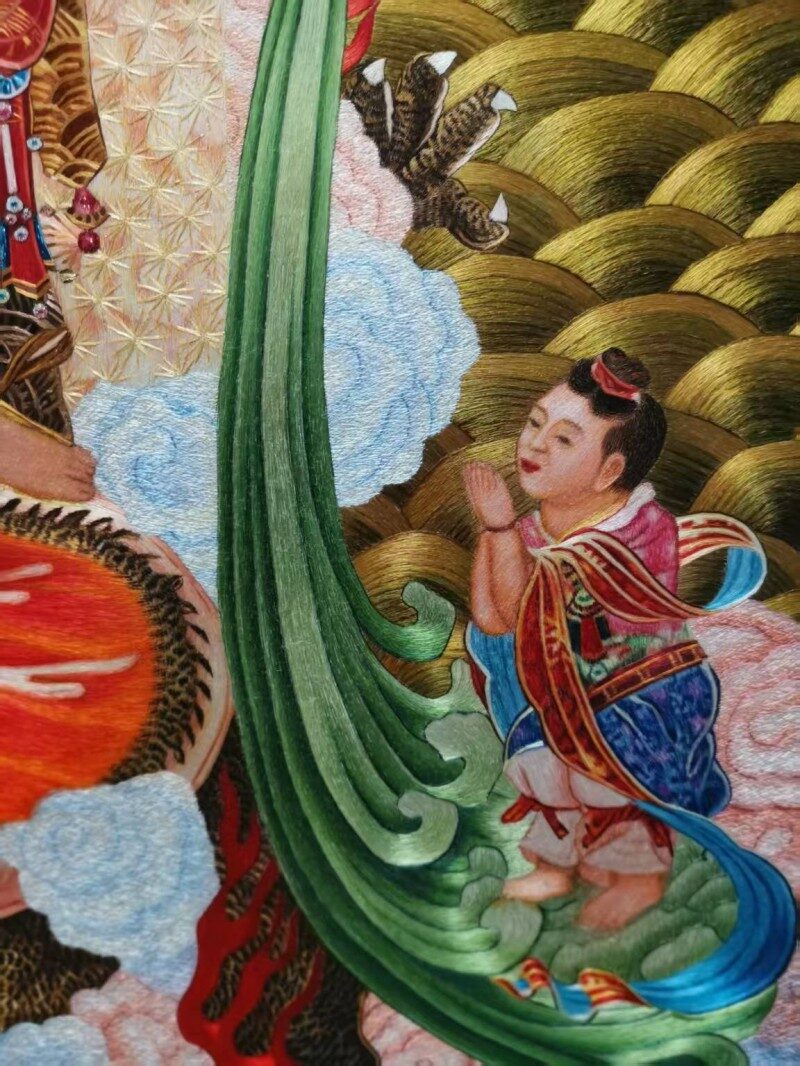
“Dragon-Riding Guanyin” Detail
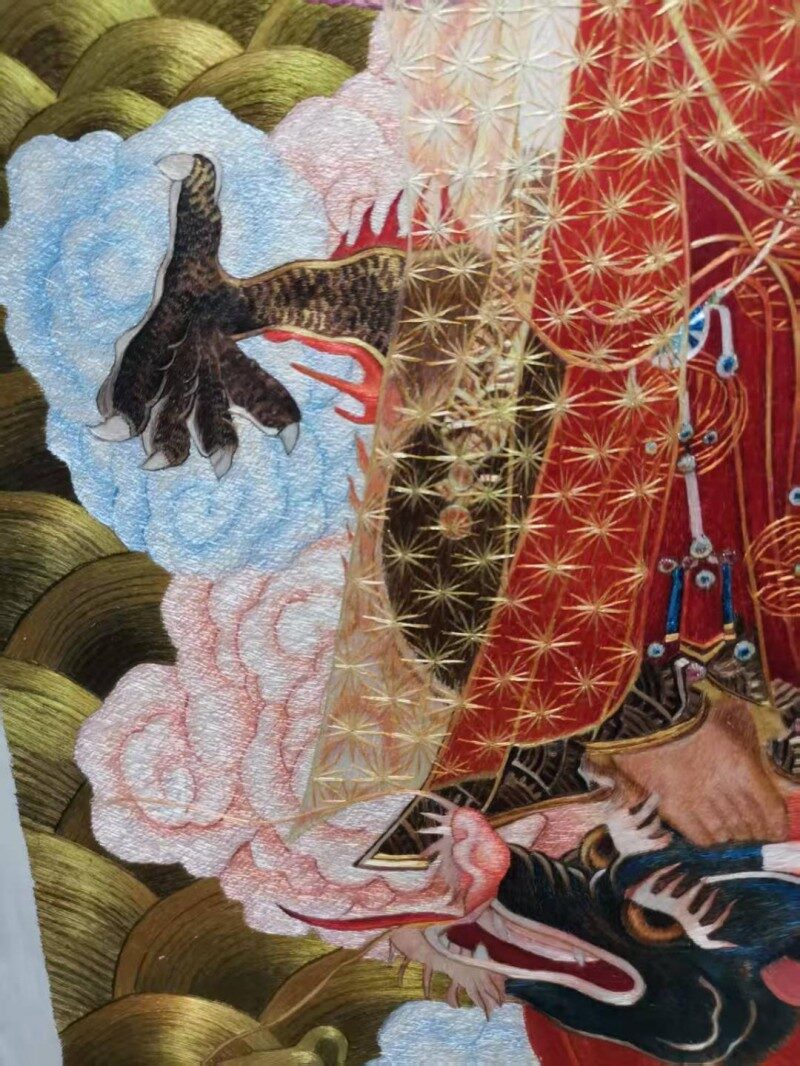
“Dragon-Riding Guanyin” Detail
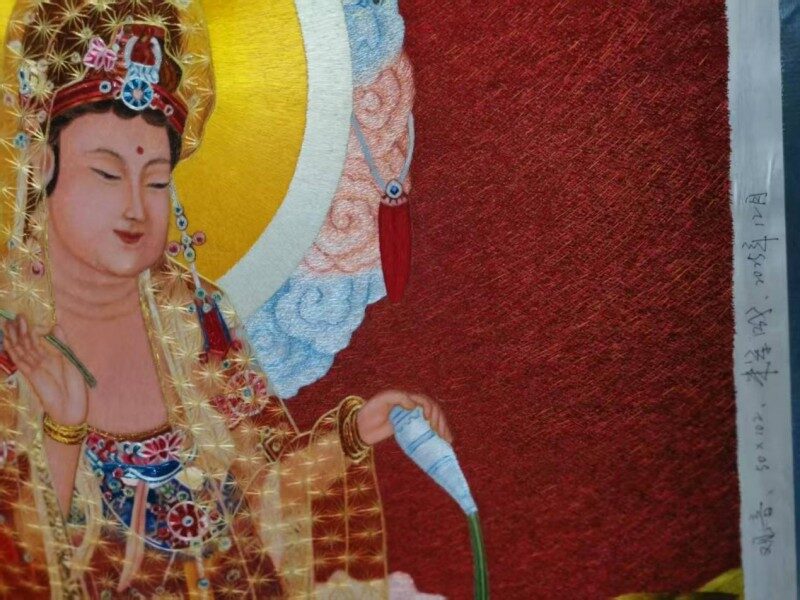
Concealed: Master Zhu Juncheng’s Handwritten Signature
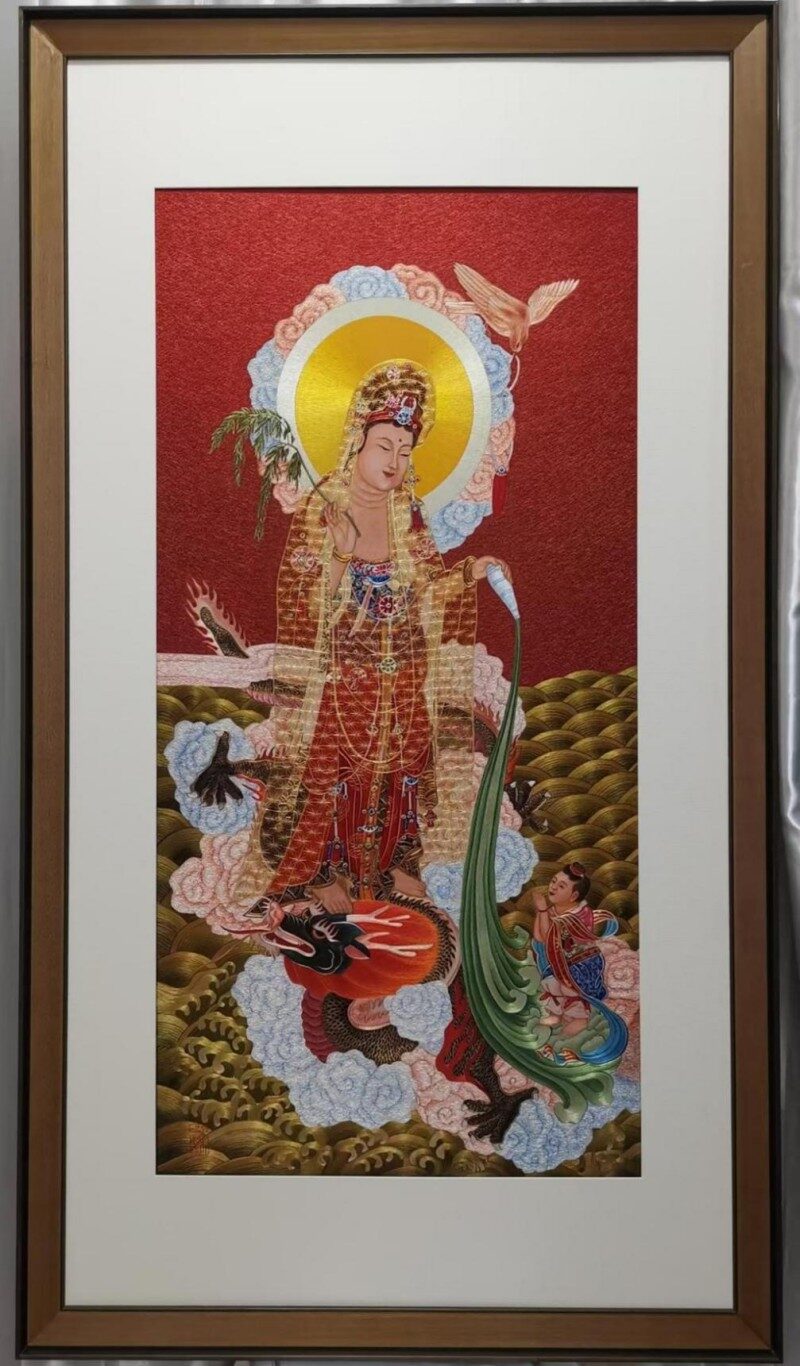
“Dragon-Riding Guanyin” Embroidery core size: 50x100cm
Embroidered by National-Level Master Zhu Juncheng Studio Yiran Embroidery Method
“Dragon-Riding Guanyin” Embroidery Creation Notes
Each of the thirty-three Guanyin has its own karmic origin. Dragon-Riding Guanyin arose from the “Universal Gateway Chapter” story of the heavenly dragon’s transformation, carrying the prayers of sentient beings for deliverance from adversity and the calming of storms, and is the Guanyin statue with which the public empathizes most deeply. In creating this embroidery work, we avoided two extremes common on the market: one is completely copying the dark, mottled texture of ancient paintings, trapped in antiquarianism without new life; the other is arbitrarily altering rituals and using exaggerated dragon designs, seeking novelty while losing roots. The final tone was set: Dharma form and ritual strictly revere Tang and Song water-and-land paintings and Kamakura Tang-style ancient scroll rules, while visual shaping relies on the Yiran Embroidery Method for contemporary innovation—one guarding, one transforming, thus achieving the wonder of harmony, always taking Guanyin’s greatly compassionate Buddha-mind and pure Dharma form as the core of the picture.
The draft tracing has two veins: first, domestic water-and-land paintings of Guanyin of the South Sea through the ages, recording the folk legend of Guanyin crossing the sea to save beings; second, Kamakura-period dragon-head Guanyin ancient scrolls drawn based on Tang models, corroborating the image norm of the heavenly dragon supporting the Bodhisattva. Research upholds the source of historical materials, not arbitrarily fabricating the appearance of the sacred image; if Dharma form and ritual are disordered, even the most delicate stitching is only technical embroidery, losing the core of transmitting the Dharma through silk and revealing Buddha-nature. Many popular works deliberately magnify the dragon’s majesty, losing the Bodhisattva’s gentle and compassionate spirit. We adjusted the compositional focus, with the auspicious dragon hidden below the lotus pedestal, lines gentle and soft, dragon scales using light blue-green gradient silk threads, weakening sharp edges, expressing the original intent of the heavenly dragon subduing ferocity and protecting the Bodhisattva. The depiction of the pure bottle and willow branch is especially meticulous; willow strands as fine as hair are individually split and stitched with single needles, and water droplets are dotted with shimmering stitches, as if sweet dew were about to fall, subtly matching the meaning of cleansing the world’s suffering. The auspicious dragon, pure bottle, and lotus pedestal in the picture are all external forms; the embroidery appears real yet not real; the greatly compassionate original mind is the eternal source of Buddha-nature.
The light and shadow advantages of the Yiran Embroidery Method are fully revealed in this Guanyin’s face, and this is also the innovative point where we break free from the flat limitations of ancient methods. Traditional ancient embroidery can only lay colors flatly, making it difficult to shape the warm, three-dimensional spirit of a portrait; the master used extremely fine mulberry silk, with dozens of skin-tone silk threads blended layer by layer, naturally transitioning from forehead, cheeks to jaw, with no visible stitch boundaries. The outer halo is embroidered layer by layer with light red and pale gold, transitioning from dense inside to light outside, creating a soft halo, replicating the warm and transparent atmosphere of ancient mural head halos. Sudhana stands beside him, small and agile in form, with light and simple stitching, forming a layered contrast with the heavy and steady main figure—one still, one moving—completely restoring the picture narrative of the Bodhisattva teaching and transforming beings. Throughout creation, one contemplates one’s own mind with the sacred image, gazing at Guanyin’s greatly compassionate Dharma form day after day, yet not clinging to the painted outline, deeply understanding that seeing Dharma forms one does not abide in Dharma forms; external appearance is ultimately a bubble, and compassionate Buddha-nature is inherent in everyone.
Modern life is full of storms everywhere: career ups and downs, interpersonal conflicts, inner anxiety, all like the huge waves of the vast sea. The imagery of Dragon-Riding Guanyin precisely reflects the spiritual yearning of contemporary people. Painting can lay out emotions in one go; embroidery slowly precipitates compassion over a long creation. With a thousand stitches and ten thousand threads each day, the gaze resting for a long time on the Bodhisattva’s downcast face, the creator’s inner restlessness also calms; this quietness is hidden in every strand of silk and ultimately transmitted to those who stop to admire. Assembly-line machine embroidery has only standardized patterns, seeking only to replicate external form, lacking this gentle aura of long coexistence between person and silk thread, clarifying the mind and seeing one’s nature.
Since ancient times, temples have regarded embroidering Guanyin sacred images as merit; every stitch and thread is mind-contemplation practice, and this tradition should not dissipate with the times. Many today regard embroidery as cheap soft decoration, ignoring that silk embroidery Buddhist paintings completely preserve the core of ancient offering art. This Dragon-Riding Guanyin follows ancient forms and innovates in stitching, not making an old antique replica, but adapting to contemporary living spaces and the spiritual needs of contemporary people. Hung in a quiet room at home, without many words, viewing the Bodhisattva seated calmly on the waves, one can penetrate the myriad external forms and perceive the stable Buddha-nature inherent in one’s own mind.
Silk thread is the medium, connecting the compassion of ancient sages with the minds of people today, upholding ancient ritual without losing the cultural vein, integrating original stitching to suit the present, using Dharma forms of seeming reality yet not reality to guide the world to clarify the mind and see one’s nature—this is the uniqueness of Buddhist statue mind-nature embroidery, different from all decorative crafts. Brush and ink easily dry up; mulberry silk endures, and greatly compassionate Buddha-nature remains forever through thousands of threads.
Textual Research on Classics (Researched and compiled by Beijing Xiuzhentang)
“Dragon-Riding Guanyin”
This product is the dragon-head Guanyin of the thirty-three transformation bodies, a restored embroidery work of the original Tang and Song water-and-land painting format.
Origin and Dissemination in Four Phases
- Early Tang Initial Creation of the “Universal Gateway Chapter” Image
According to the “Lotus Sutra · Universal Gateway Chapter” scripture “manifesting the heavenly dragon body to preach the Dharma,” Tang dynasty water-and-land ritual sites first created the Guanyin riding a heavenly dragon across the sea statue, as an offering image exclusively for water-and-land Dharma assemblies.
- Tang and Song Jiangnan and South Sea Image Maturing and Finalizing
Water-and-land temples in Liangzhe and South Sea Putuo produced large numbers of Dragon-Riding Guanyin murals, silk paintings, and embroidered scrolls; the “Putuoshan Gazetteer” records that Tang and Song temples offered this sacred image year-round, forming the fixed composition of “Guanyin treading the dragon, Sudhana standing in attendance.”
- Southern Song Eastward Transmission with Tiantai Sect Texts
Tiantai monastic communities carried water-and-land painting drafts and Guanyin embroidery samples to Japan, transmitting the complete dragon-head Guanyin format to the Heian and Kamakura periods of Japan.
- Kamakura Period Replication and Transmission
Kamakura Shingon and Tiantai temples replicated Dragon-Riding Guanyin according to Tang and Song water-and-land models; the Hase-dera surviving ancient scroll completely preserves the Tang-style composition, and Japanese temple documents record the thirty-three Guanyin offering tradition.
Complete Chronological Vein
Early Tang creation of the heavenly dragon Guanyin prototype according to the “Universal Gateway Chapter” → Two Song South Sea and Jiangnan water-and-land temples finalizing the complete Dragon-Riding Guanyin composition → Southern Song image eastward transmission with the Tiantai sect → Kamakura ancient temples replicating and offering generation after generation
The root of the dragon-head Guanyin image originates from Central Plains Tang and Song water-and-land culture; Japanese remains are merely replicas of Central Plains designs.
Supplementary Collection Narrative
Dragon-Riding Guanyin on the market often exaggerates the dragon beast’s momentum and deletes Sudhana, departing from the original intention of “great compassion subduing ferocity”; this work strictly restores the original Tang and Song water-and-land painting composition, supported by triple research from Buddhist scriptures, temple gazetteers, and Kamakura ancient paintings. Zhu Juncheng’s Yiran embroidery strictly observes the compassionate spirit of the statue, with innovative gradient stitching weakening the dragon’s sharpness, completely restoring the original Tang and Song Guanyin offering intent; embroideries with complete format restoration are rare in existence.
Exclusive Research Materials
- Ancient texts: “Lotus Sutra · Universal Gateway Chapter,” “Putuoshan Gazetteer,” Kamakura “Hase-dera Thirty-Three Guanyin Origin”
- Domestic archaeology: Two Song Jiangnan water-and-land mural remains, Putuoshan Song dynasty temple statue stele catalog
- Japanese remains: Kamakura Hase-dera thirty-three Guanyin ancient scroll, Shingon temple water-and-land offering archives
- Academic support: Tang and Song water-and-land painting special research, thirty-three Guanyin image evolution academic papers