

No products in the cart.
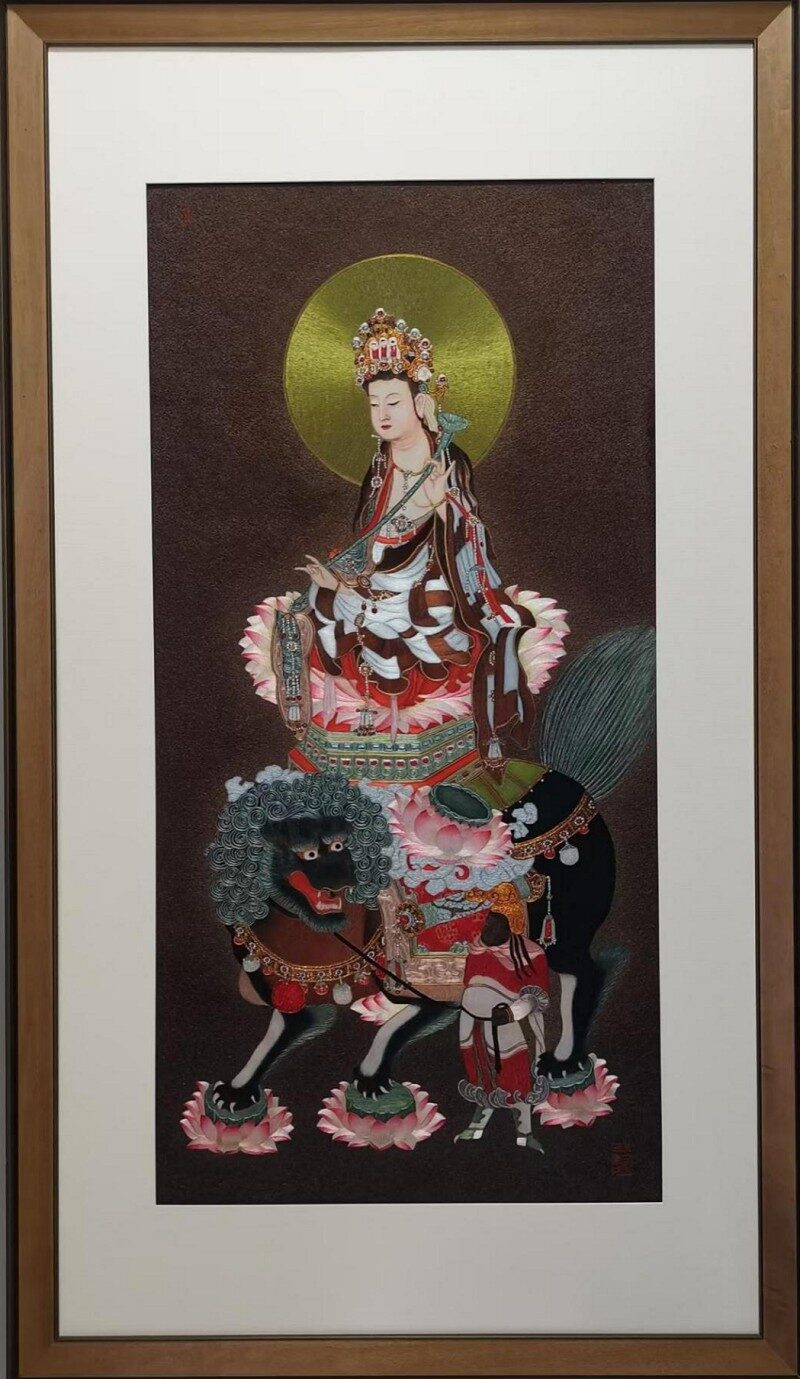
Embroidery Core 50x100cm
Standard Configuration: Anti-reflective Glass Tulip Tree Solid Wood Frame
Product Information
- Embroidery Fabric: Real silk fabric / simulated silk fabric (non-elastic, suitable for expressing this work).
- Embroidery Thread: Real silk, plant-dyed.
- Craftsmanship: Yiran Embroidery Method, purely handmade.
- Thread Diameter: 1/4 thread – 1/16 thread.
- Stitch Density: ≥120 stitches per square centimeter.
Color Layers: Main body superimposed colors ≥5 layers.
Frame: Standard is Tulip Tree solid wood (imported American wood), front width 5.4cm, hidden mortise-and-tenon structure; the frame can also be exclusively customized according to your needs; the frame is handmade, and actual condition may differ slightly from the illustrated effect.
Backboard: Solid camphor wood, universal, thickness 0.9cm; fixing method: recessed stainless steel screws.
Mat Board: Real silk damask fabric, padded mat board, heat-pressed and formed; or paper mat board, to meet the matching effect.
Glass: Anti-reflective glass, with light transmittance and UV protection both at 98%.
Packaging Box: Standard is a specific paper box; optional aluminum alloy case (not applicable in some countries/regions such as the United States).
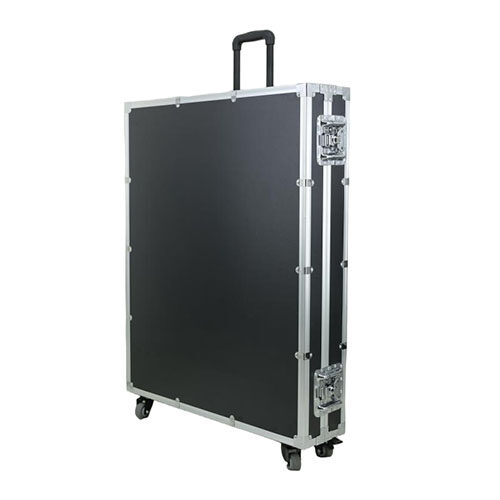 Aluminum Alloy Wheeled Trolley Case | 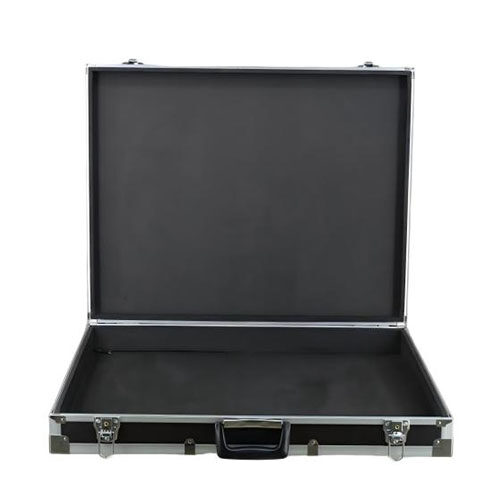 Interior Effect Lined with Black Pearl Cotton |
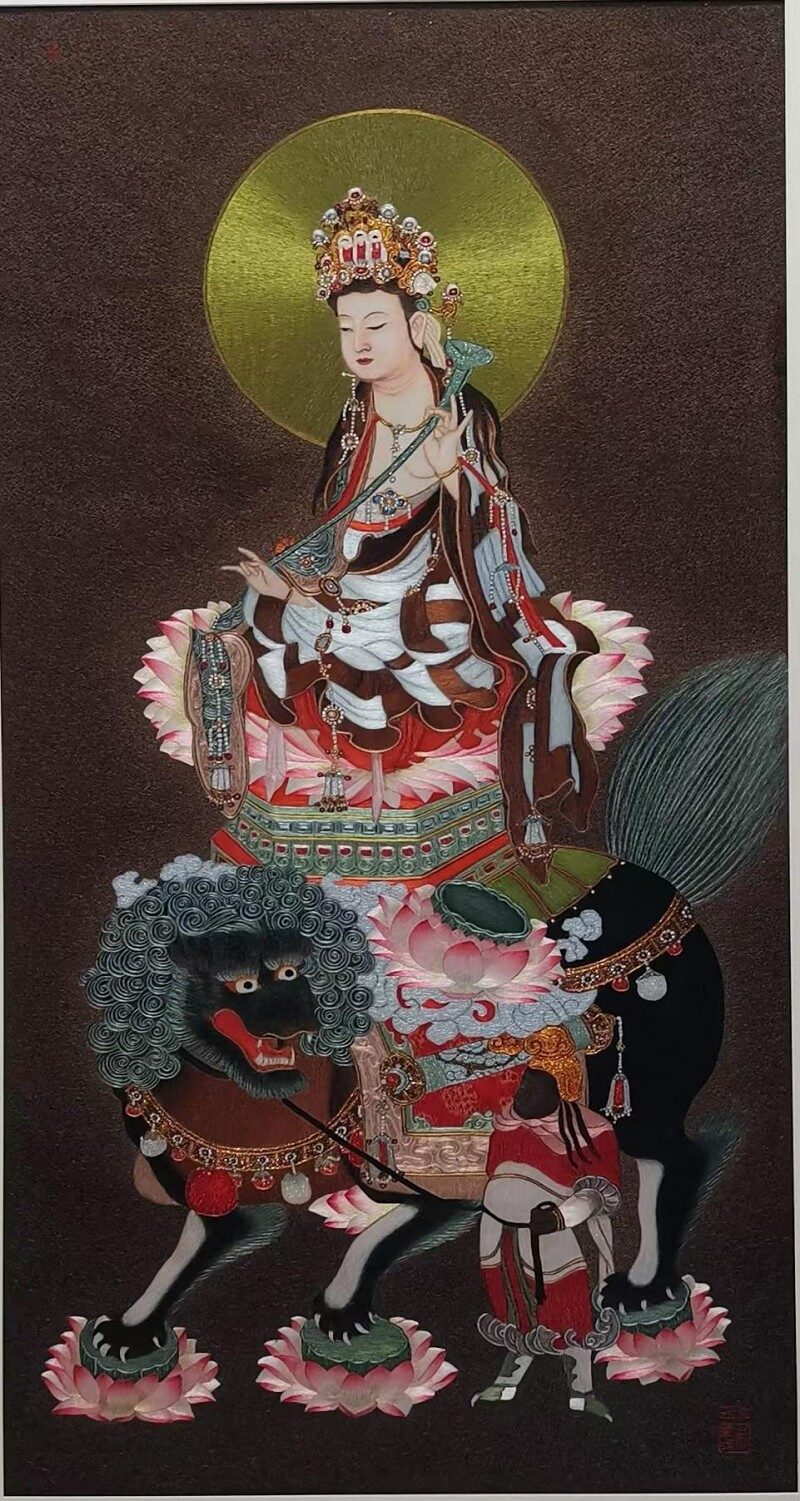
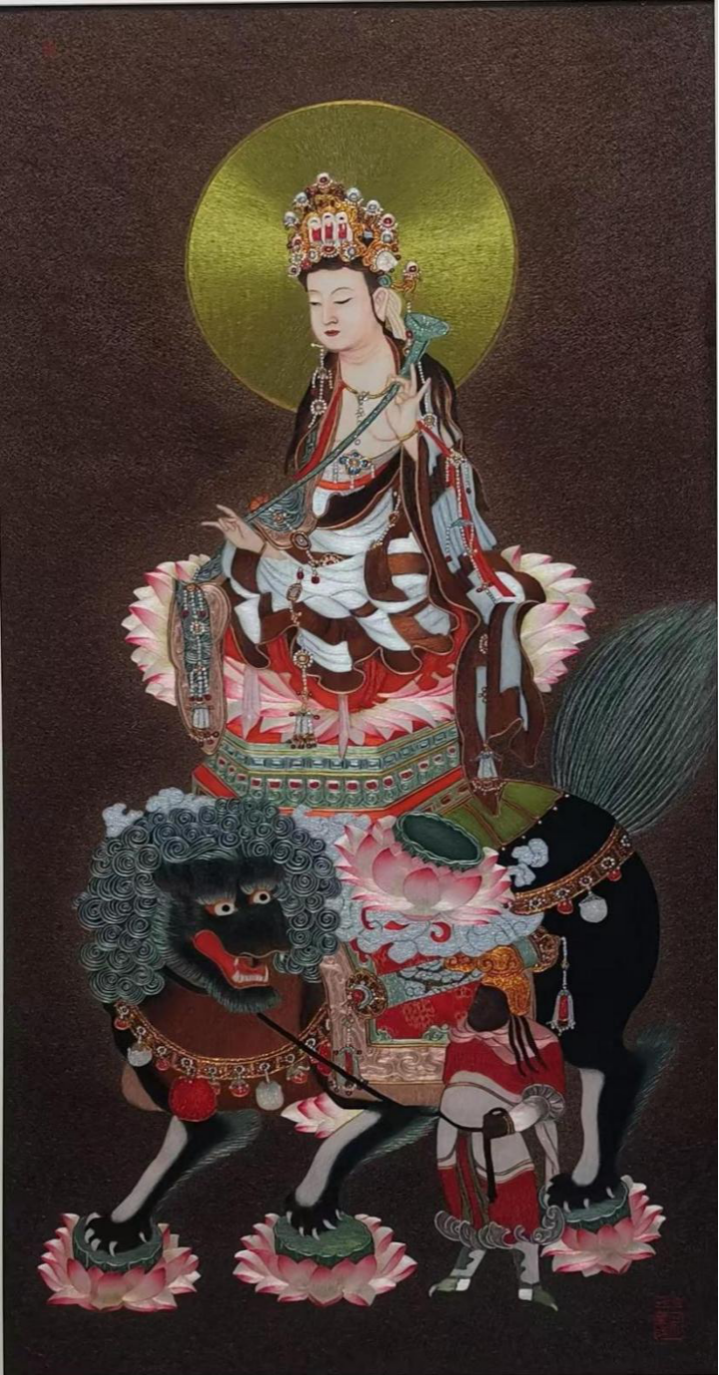
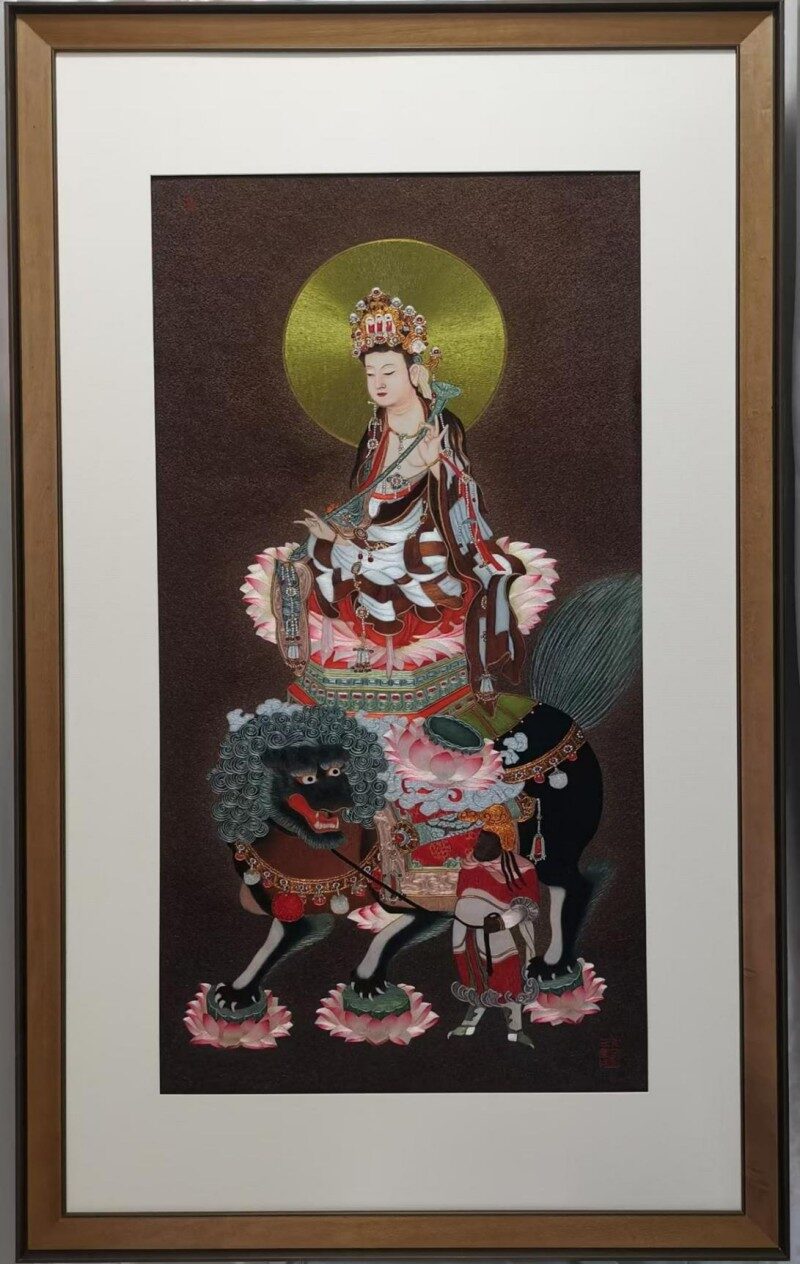
“Manjushri Riding the Lion“
Size: 50x100cm
Embroidered by National-Level Master Zhu Juncheng Studio Yiran Embroidery Method
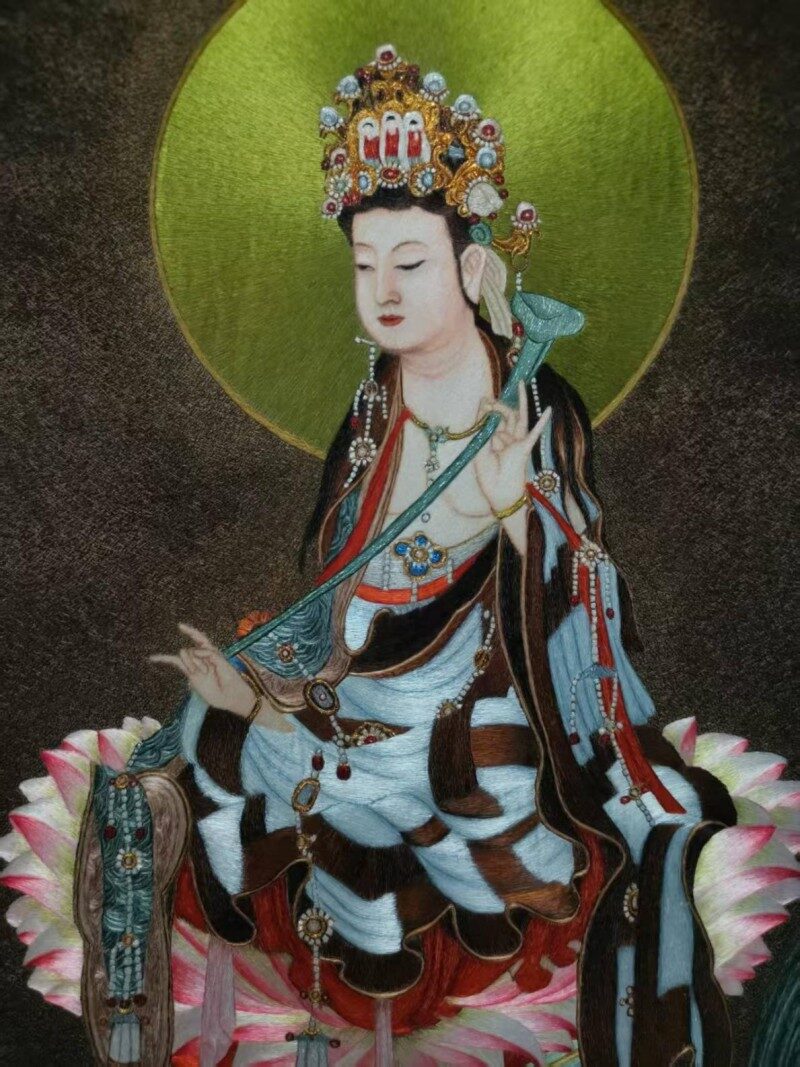
“Manjushri Riding the Lion” Detail
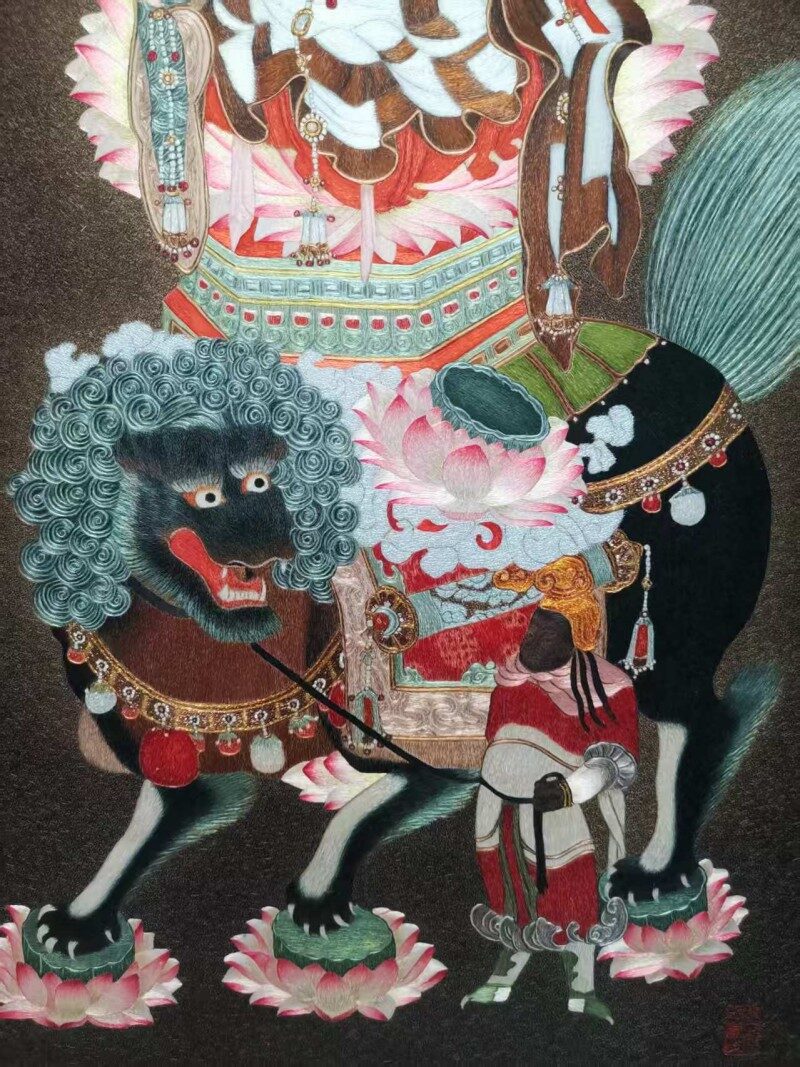
“Manjushri Riding the Lion” Detail Lion’s Paw Stepping on Lotus
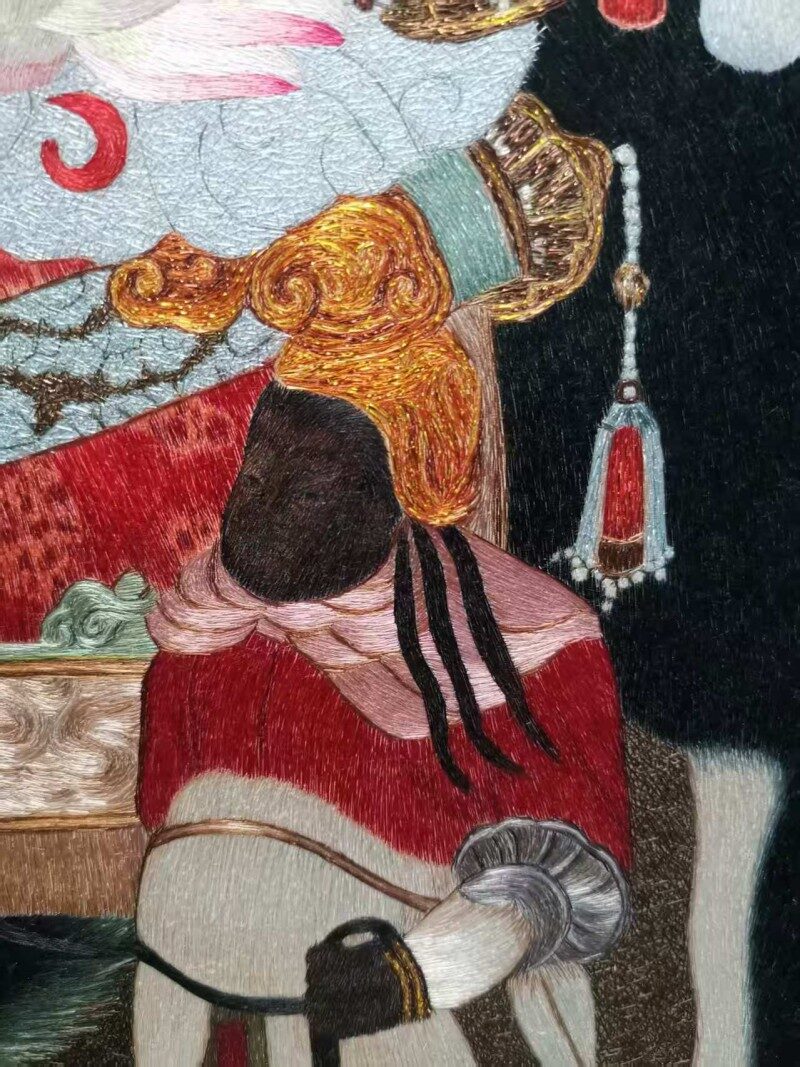
“Manjushri Riding the Lion” Detail King of Khotan Riding the Lion
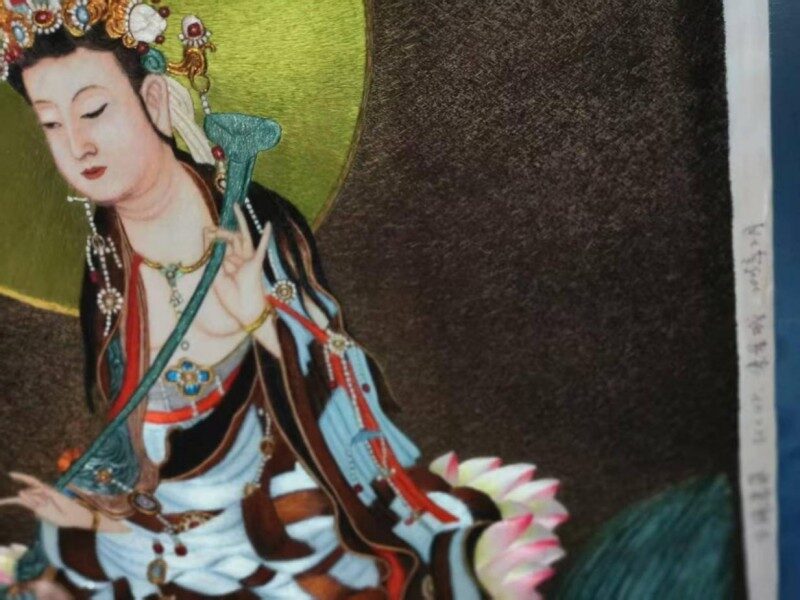
Concealed: Master Zhu Juncheng’s Handwritten Signature
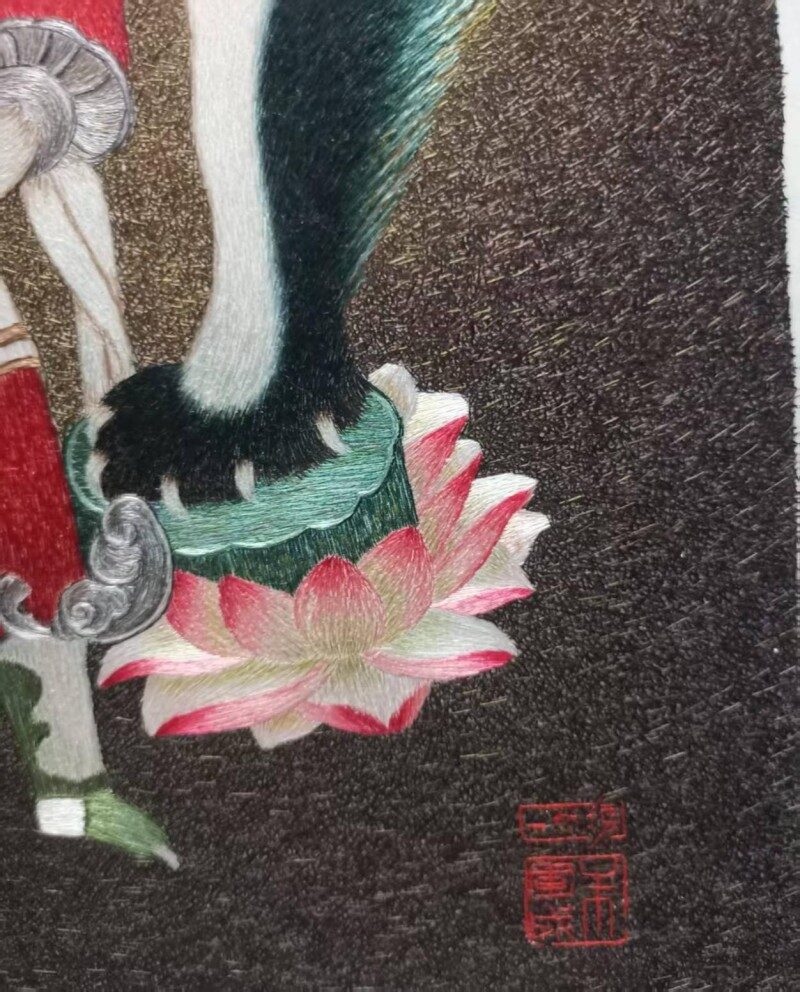
Zhu Juncheng Embroidery Seal Yiran Embroidery Seal
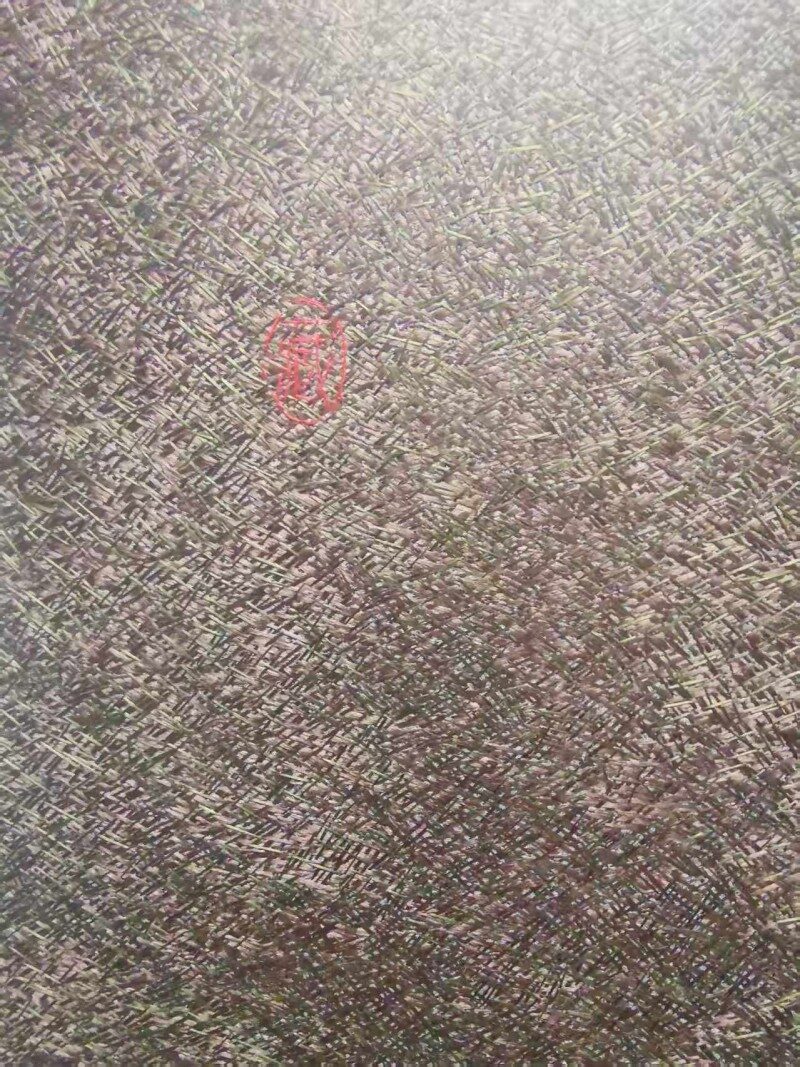
“藏” (Concealed) Character Embroidery Seal
“Manjushri Riding the Lion” Embroidery Creation Notes
When people speak of Manjushri, most remember only the blue lion and the sword of wisdom, yet few deeply investigate the complete origin of this image group across the East China Sea. When Beijing Xiuzhentang prepared this embroidery work, it did not directly begin with silk threads, but instead followed three layers of remains—the Chang’an court draft by Yin Lin, the new-style Manjushri mural in Mogao Cave 220, and the Kamakura temple surviving copies—spending several months comparing image details to clarify the origin and evolution of the unique composition of “the King of Khotan leading the lion.” Many contemporary Buddhist statues arbitrarily delete the lion-leading figure; seemingly simplifying the picture, this actually severs the unique Silk Road civilizational imprint of Tang dynasty Manjushri images, losing historical weight. Textual research takes historical materials as a mirror; depicting Dharma forms is only to reveal the mind through form. If the draft lacks basis, even the most exquisite stitching is ultimately only technical embroidery, not a mind-nature embroidery work that carries the Way through silk and reflects Buddha-nature.
The creation strictly observes two measures: first, revering the ancients—rituals, composition, and figure proportions fully follow Dunhuang ancient rules, without arbitrarily adding or removing statue elements, upholding the orthodox thousand-year Dharma forms; second, opening the new—not mechanically copying the mottled, aged appearance of murals, avoiding the stagnation of unthinking antiquarianism. Master Zhu Juncheng’s original Yiran Embroidery Method is precisely a contemporary expression built on the foundation of ancient methods, reconstructing silk thread layers with contemporary light and shadow logic. This measure of taking from the ancients without being bound by them achieves the wonder of blending ancient and modern. The core difficulty lies in balancing the ferocity of the blue lion with the gentle compassion of the Bodhisattva’s face. Murals use heavy mineral colors to outline the lion beast’s sinews and bones, with brush and ink clearly distinct; silk threads lack the natural advantage of ink shading, so relying on layered refractive stitching to reconstruct volume is the innovative ingenuity of the present. The lion’s mane is stacked layer by layer; we subdivided more than twenty shades of golden-brown silk threads, laying stitches layer by layer from dark areas to highlights, making the majestic lion dignified without being ferocious; the Bodhisattva’s face uses only extremely fine split silk, weakening strong light and dark contrasts, with soft transitions at the eye corners and brow ridges, restoring the quiet and restrained spirit of Dunhuang statues. The King of Khotan’s clothing replicates Tang dynasty Western Regions brocade patterns; necklaces and jewels use virtual-solid light-lifting stitching, appearing as an integrated whole from a distance, while up close each bead ornament has a transparent luster, replicating the visual layering of ancient mural gold-piled colors. The auspicious beasts and necklaces depicted by stitches are all illusions; the embroidery pursues seeming reality yet not reality, using tangible Dharma forms to reveal the inherently complete pure Buddha-nature of all beings.
For a long time, the public has simply categorized embroidery as handicraft, ignoring the core of ancient court, aristocratic, literati, and scholarly embroidery collections: the interweaving of needle and thread is itself a continuous practice of stillness and concentration. In painting, brushstrokes can be altered; once an embroidery stitch is set, it cannot be changed, and every stitch requires the creator to be calm in mind and contemplate the original intent of the sacred image. During the long days of embroidering Manjushri, the studio would calm the mind and clarify thoughts before starting each day, contemplating with the greatly wise Bodhisattva, seeing inner distractions through millions of needle-threadings. The meaning of the lion’s roar breaking ignorance lies not only in the auspicious beast in the picture, but also in the entire process of polishing restlessness and clarifying the mind and seeing one’s nature in creation. Seeing the fierce form of the blue lion, one knows wisdom can cut off afflictions, yet does not cling to the lion’s external form; beholding the dignified Dharma form of the Bodhisattva, one recognizes that self-nature inherently possesses prajna, yet does not drown in the appearance of the statue—seeing Dharma forms without abiding in Dharma forms is precisely the fundamental difference between Buddhist statue embroidery and ordinary craft.
The image genealogy transmitted across the sea that moved us most deeply is that many complete sets of Tang dynasty drafts in the Central Plains were scattered in wind and sand, yet the complete paradigm was preserved generation after generation in Japanese temples. Today, using embroidery to redraw the new-style Manjushri, we uphold the skeleton of the ancients and give it contemporary texture, not making a rigid copy of an ancient painting, but using the unique silk art of the East to recover the Tang dynasty art language lost to the years. Paintings eventually age and fade with silk and paper; high-quality mulberry silk is stable in nature and can preserve Dharma forms for a long time with proper storage. This embroidery work is not only an image for offering, but also a visual document left for future generations, allowing them to understand through silk threads the long vein of High Tang Silk Road and Sino-Japanese Buddhist exchange.
Ordinary objects only please the eye, while orthodox Buddhist statue embroidery settles the human heart. People rushing through the mundane world are often trapped in hesitation and confusion; beholding the sacred image of Manjushri, one finds clear awareness and decisiveness in the quiet spirit of each stitch and thread. The needle is the brush for ferrying the mind, the thread is the ink for carrying the Way; using tangible silk strands to paint the formless Buddha-mind, using Dharma forms to inspire beings to clarify the mind and see their nature, upholding ancient methods while integrating new techniques, following the cultural vein while responding to the present—this is the unique power of Buddhist-themed embroidery beyond ordinary handmade objects.
Textual Research on Classics (Researched and compiled by Beijing Xiuzhentang)
“Manjushri Riding the Lion”
This product is a restored embroidery work of the new-style Manjushri format derived from early Tang Chang’an court drafts and finalized in Dunhuang.
Origin and Dissemination in Four Phases
1. Early Tang Chang’an · Creation of the Format (Origin)
Tang dynasty Yin Lin first created the symmetrical Manjushri riding a lion statue paradigm; “The Famous Paintings of Successive Dynasties” preserves textual records, the earliest official textual record of Manjushri images. Court painters drew drafts that spread westward to the Hexi Corridor.
2. Sixteenth Year of Zhenguan, Dunhuang · Finalization of the Image (Core Domestic Remains)
Mogao Cave 220 was completed, fully depicting the new-style Manjushri: Manjushri seated on a blue lion, with the King of Khotan leading the lion as a matching composition. Cave archaeological reports and the “Complete Record of Mogao Cave Contents” can verify this. Contemporaneous woodblock Manjushri prints by Lei Yanmei and embroidered Buddhist banners unearthed from the Library Cave simultaneously adopted this composition, providing physical evidence that Tang embroidery replicated the Manjushri image.
3. Late Tang to Two Song · Nationwide Popularization, Preparation for Eastward Transmission
Mount Wutai, major caves in the Central Plains, and Jiangnan Zen temples commonly painted Manjushri riding the lion murals and embroidered Buddhist scrolls; Japanese envoys to Tang and Shazhou Guiyijun silk Buddhist paintings went to sea via Mingzhou, and Tang-style Manjushri images were transmitted to Japanese Heian-period temples for copying.
4. Kamakura Period · Complete Overseas Inheritance
Southern Song Lanxi Daolong crossed eastward, again bringing Huayan Manjushri image models; Japanese Buddhist masters created based on Dunhuang Tang-style foundations, and the Manjushri wood carvings of Nara Kofuku-ji and Saidaiji, as well as Kamakura ancient temple Manjushri silk paintings, completely preserve the original composition of “the King of Khotan leading the lion,” with only softened lines to suit local aesthetics, verifiable in the collection archives of the Japanese National Museum.
Complete Chronological Vein
Early Tang Yin Lin court draft → Zhenguan Dunhuang Cave 220 finalized new-style Manjushri → Tang and Song nationwide caves and embroidery paintings popularized → Tang and Song monastic communities carried images eastward to Japan → Kamakura temples replicated and preserved the complete Tang-style prototype
The root of the entire statue system originates in Central Plains Chang’an and Dunhuang; Japanese remains are merely extended replications of Central Plains art.
Supplementary Collection Narrative
Most Manjushri statues on the market delete the core element of the King of Khotan leading the lion, losing the historical connotation of the Silk Road; this work strictly restores the complete original format according to Dunhuang cave remains, with a closed loop of triple historical evidence from scriptures, cave physical objects, and Japanese ancient paintings, and a research chain without breakpoints. Zhu Juncheng’s Yiran embroidery strictly observes Tang dynasty statue rules, supplemented by original stitching to give contemporary visual spirit; the cultural vein is orthodox and complete, and complete sets of restored works of the same type are rare in existence.
Exclusive Research Materials
1. Ancient texts: “The Famous Paintings of Successive Dynasties” (Tang · Zhang Yanyuan), “Guang Qingliang Zhuan,” “Hase-dera Origin” Kamakura ancient manuscript
- Domestic archaeology: “Complete Record of Mogao Cave Contents,” Mogao Cave 220 archaeological report, Library Cave Lei Yanmei Manjushri woodblock, Mount Wutai Tang dynasty cave statue catalog
- Japanese remains: Nara Kofuku-ji National Treasure Manjushri wood carving, Kamakura Kencho-ji Manjushri ancient scroll, Nara National Museum Tang-style Manjushri permanent exhibition archives
- Academic support: Dunhuang Academy Tang dynasty Buddhist painting transmission monographs, Sino-Japanese Silk Road Buddhist art exchange papers
- Verification channels: Dunhuang Academy official website, Japanese CiNii academic database, Nara National Museum online collection retrieval system