

No products in the cart.
Product Information
- Embroidery Fabric: Simulated silk fabric, non-elastic, suitable for expressing this work.
- Embroidery Thread: Real silk, plant-dyed.
- Craftsmanship: Yiran Embroidery Method, purely handmade.
- Thread Diameter: 1/4 thread – 1/16 thread.
- Stitch Density: ≥100 stitches per square centimeter.
Color Layers: Main body superimposed colors ≥5 layers.
Frame: Solid wood, mortise-and-tenon structure:
Tulip Tree, imported from the United States: Front width 5.4cm, thickness 4.0cm.
Backboard: Solid camphor wood, universal, thickness 0.8–0.9cm; fixing method: recessed stainless steel screws.
Mat Board: Real silk damask fabric, padded mat board, heat-pressed and formed; or paper mat board, suitable for expressing the work.
Glass: Museum-grade anti-reflective glass, with light transmittance and UV protection both at 98%.
Outer Packaging: Specific paper box; optional aluminum alloy case (not applicable in some countries/regions such as the United States)
Embroidery core 28x39cm, extended dimensions: 55×69.5x12cm
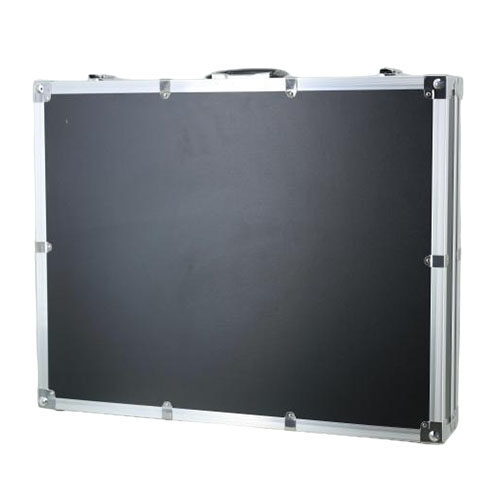 Aluminum alloy carrying case, for embroidery core 28x39cm |  Interior condition |
Embroidery core 40x55cm, extended dimensions: 72.4×90.5×17.5cm. Flip-top style, lined with black pearl surface.
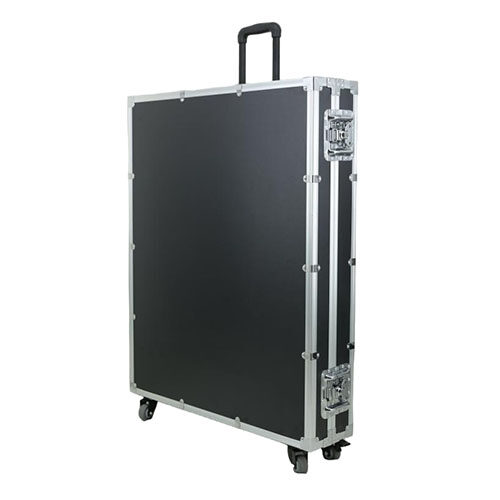 Aluminum alloy trolley case, for embroidery core 40x55cm | 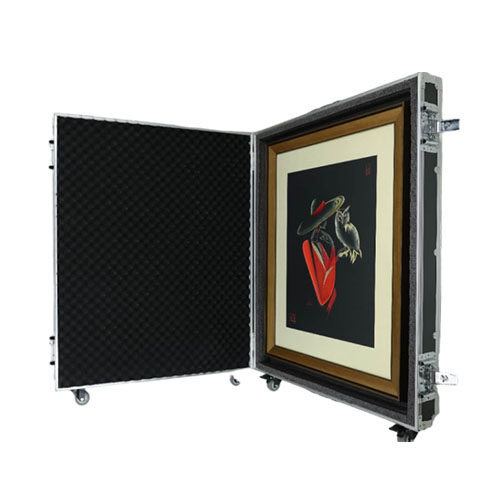 Effect diagram, for reference |
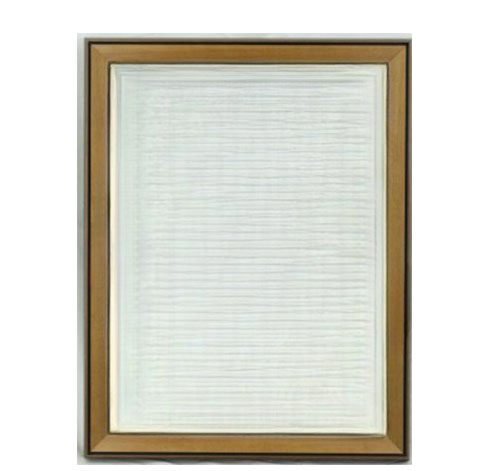
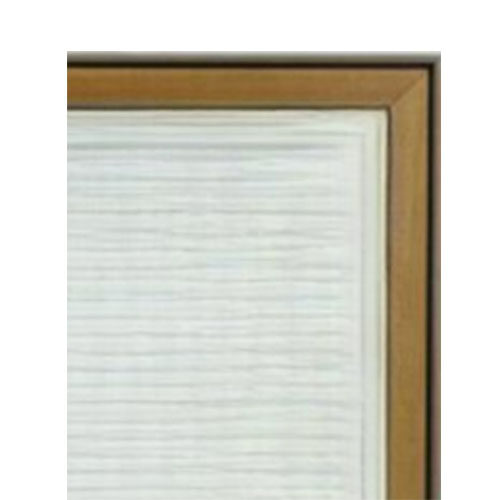
| Golden Sandalwood Solid Wood Frame Front width 2.2cm
Tulip Tree Solid Wood Frame Front width 5.4cm | Right Angle Mortise-and-Tenon Structure
Right Angle Hidden Mortise-and-Tenon Structure |
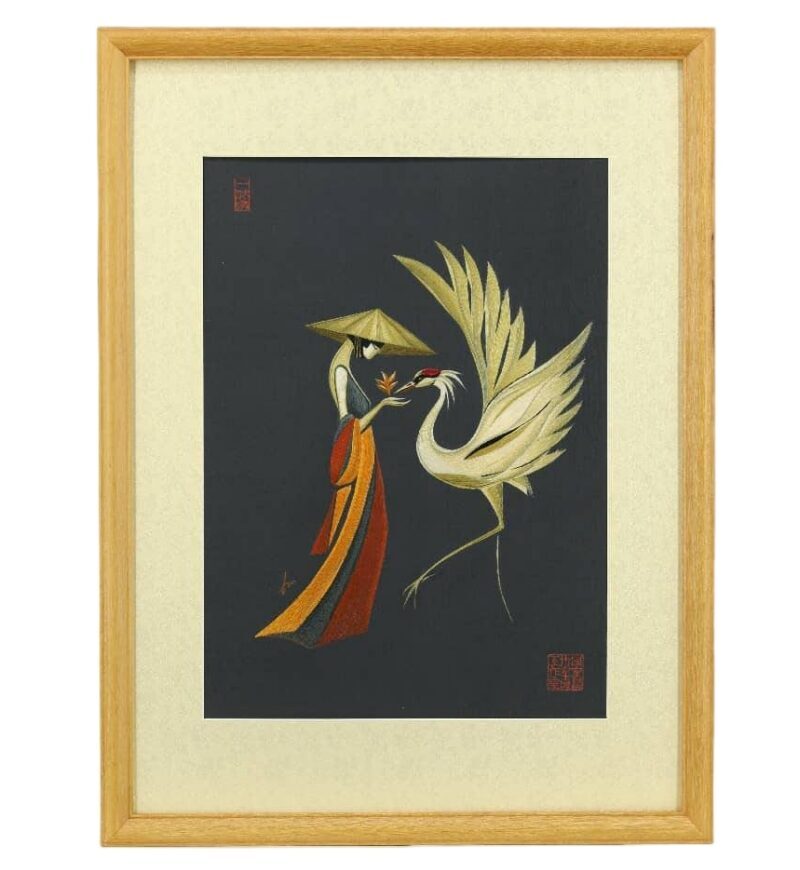
“Crane” 2.2 Golden Sandalwood Solid Wood Frame
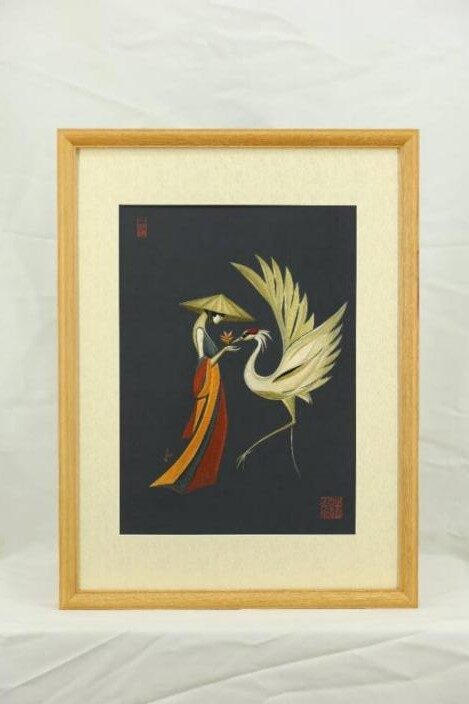 |  |  |
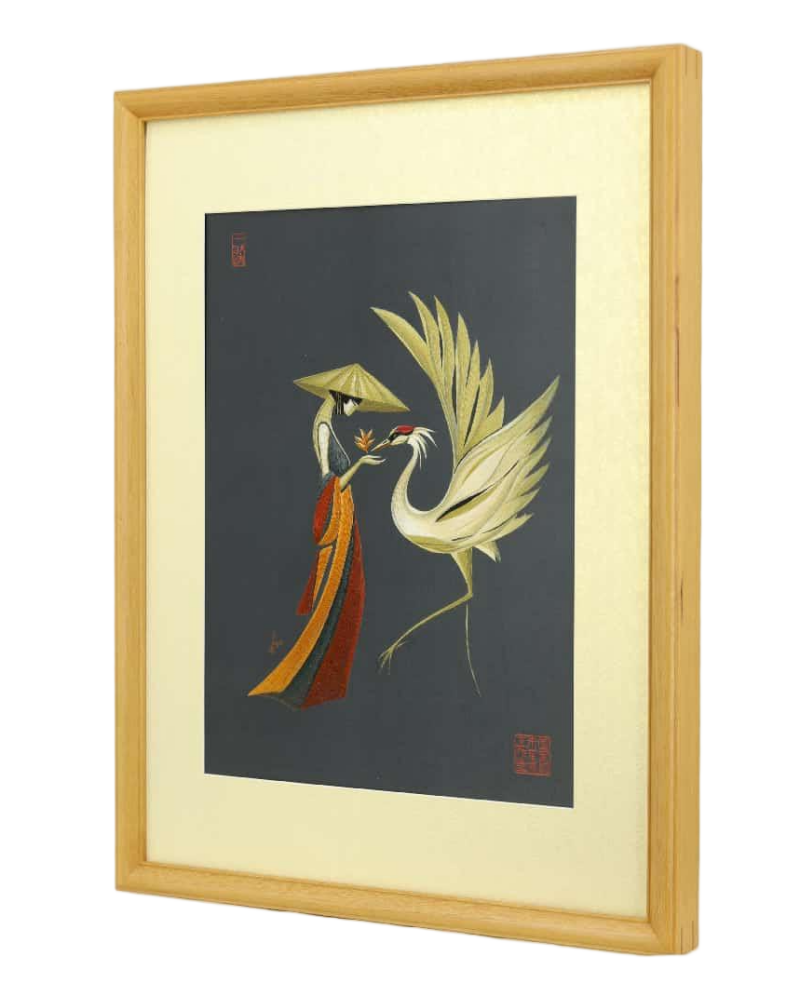
“Crane” Side View
| | |
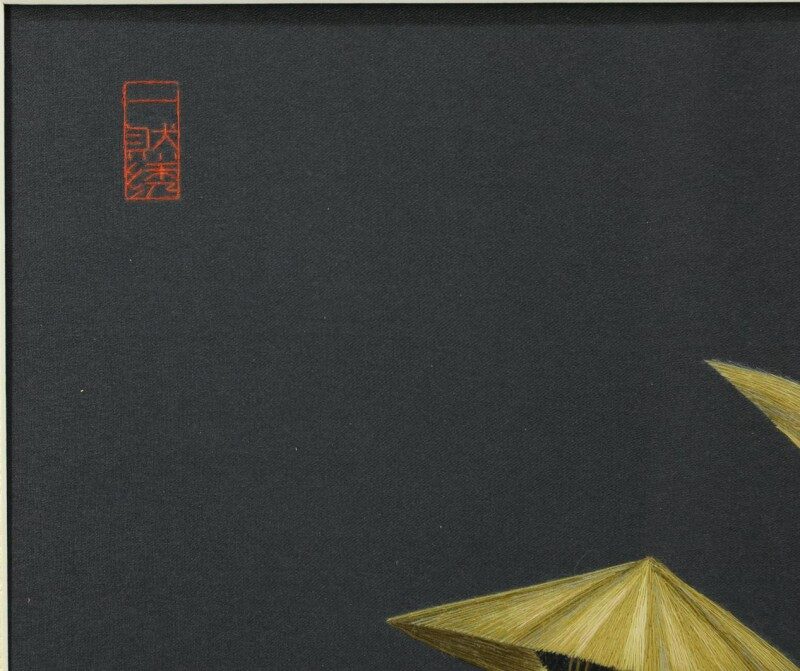
“Crane” Detail — Yiran Embroidery Seal
Tatyana Embroidery Signature National-Level Zhu Juncheng Studio Embroidery Seal
| | |
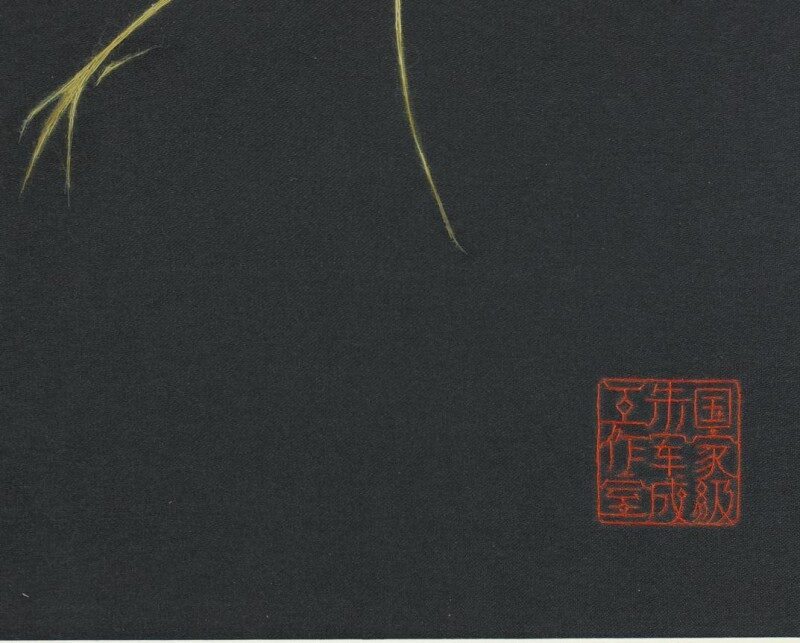
“Crane” Detail — National-Level Zhu Juncheng Studio Embroidery Seal
| | |
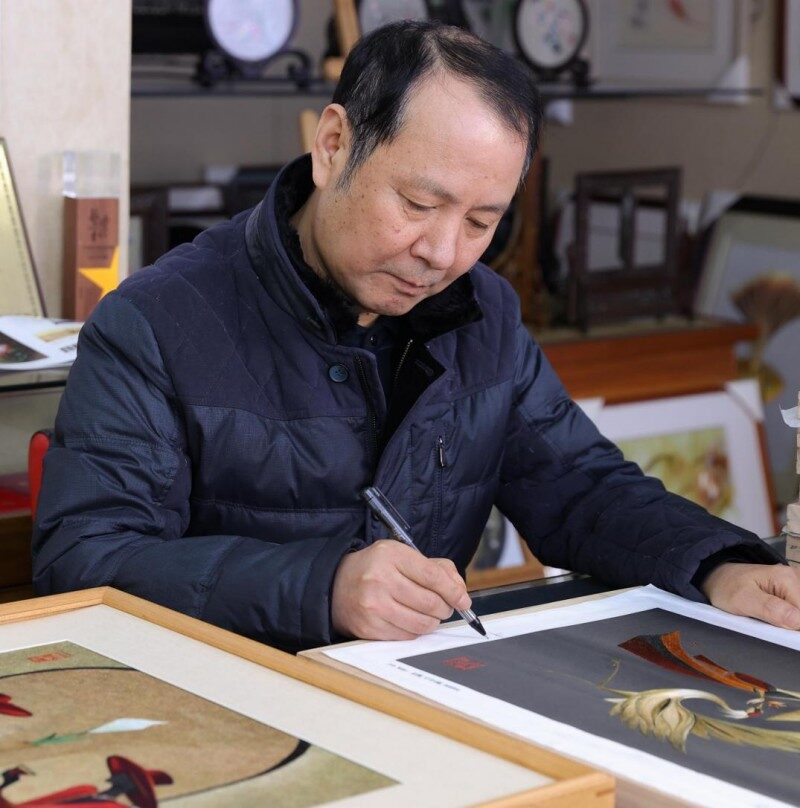
Master Zhu Juncheng’s Handwritten Signature, Concealed
| | |
“Crane“
Appreciation of the Masterpiece
This work is the classic original “Crane” by American minimalist artist Tatyana Markovtseva, finely crafted by the studio of China’s national-level Master Zhu Juncheng using the original “Yiran Embroidery Method.” It is one of the exemplary works of Yiran embroidery in the field of minimalist art.
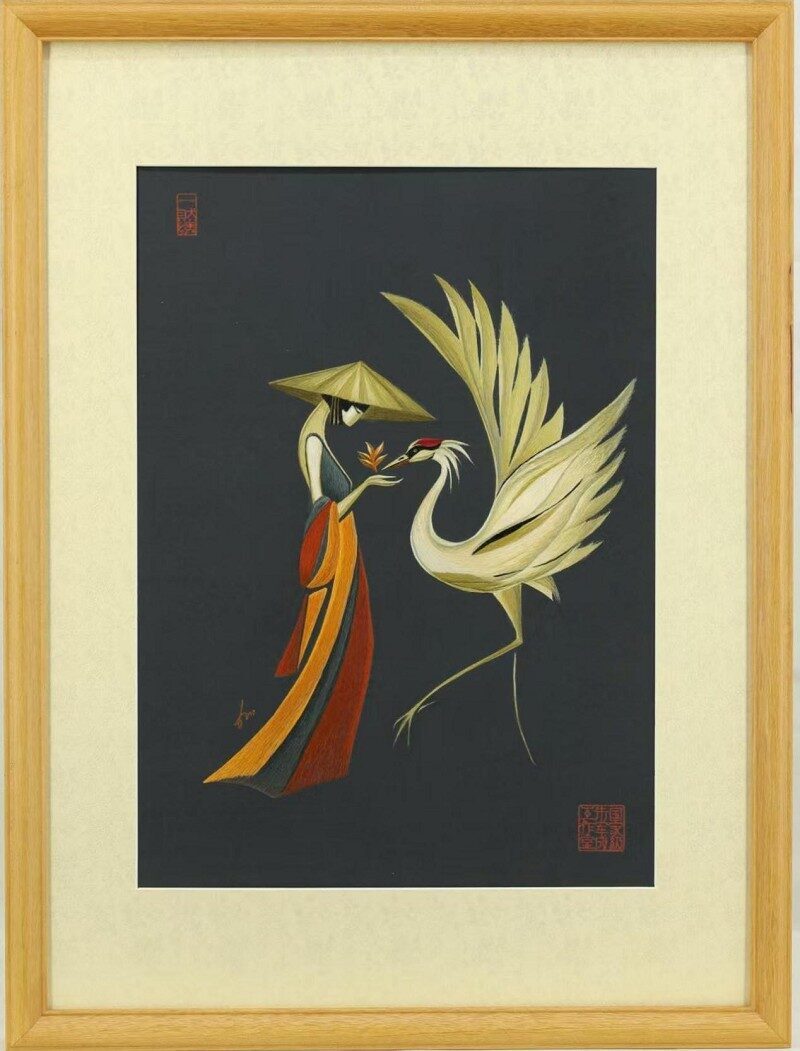
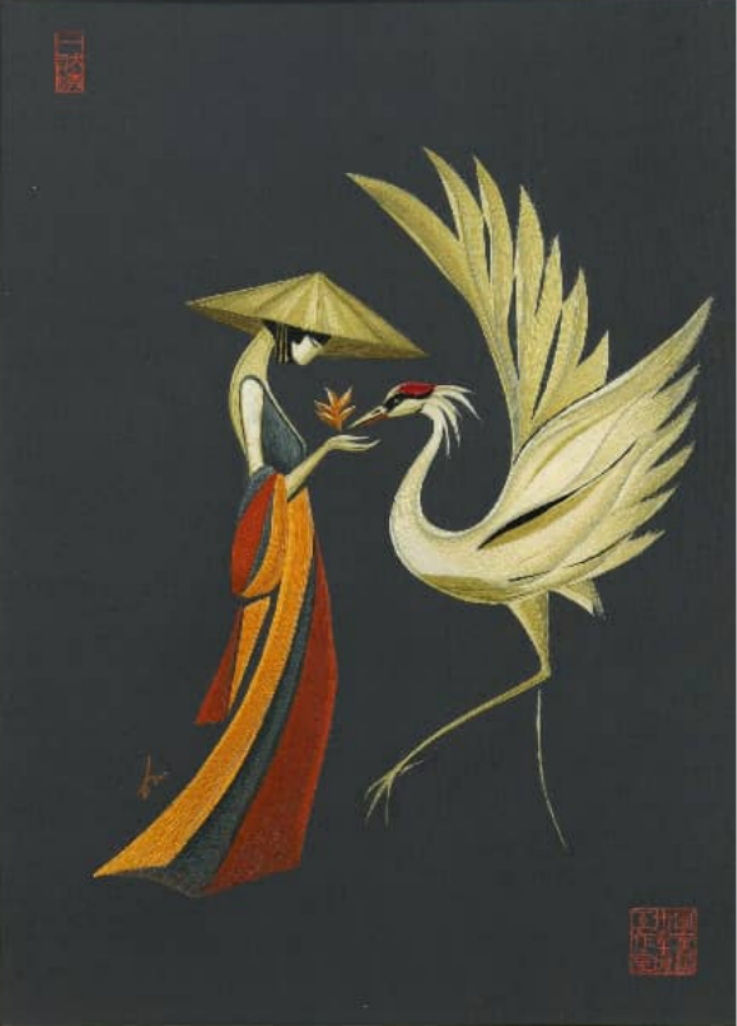
The original work uses the gentle interaction between an Eastern woman and a red-crowned crane to express the beauty of harmonious coexistence between humanity and nature. The faceless silhouette of the Eastern woman, with a bamboo hat and gradient robe, outlines a gentle and calm temperament. Her posture of holding up a bouquet conveys reverence and offering to life; the red-crowned crane spreads its wings and bows its head in response, and as a symbol of purity and auspiciousness, it represents the yearning for a pure spiritual realm. Their interaction conveys the Eastern philosophical mood of calm self-consistency and blending with all things.
The Yiran Embroidery Method breaks through the limitations of traditional embroidery, perfectly restoring the color layers, line rhythm, and oil painting texture of the original with silk thread, injecting Eastern warm Zen into the minimalist imagery, and achieving a deep integration of Eastern and Western aesthetics.
“Crane”
Tatyana Markovtsev × Master Zhu Juncheng Jointly Created Embroidery Art Masterpiece
Edition: Master Collection Series — Piece 1 of 7
Size: 40 × 55 cm
Creation Notes
Some encounters are so gentle they seem to exist outside of time.
“Dance of the Crane” captures precisely such a moment: before trust becomes connection, before movement is elevated into ritual, before two souls recognize each other without the need for words.
This work was created by internationally renowned American minimalist artist Tatyana Markovtseva and reinterpreted with superb silk embroidery craftsmanship by Chinese Arts and Crafts Master and representative inheritor of Yiran embroidery Zhu Juncheng. It is one of the most representative art masterpieces in the historic **East–West Fusion** series. The two masters did not merely transform a painting into embroidery, but jointly created a brand-new artistic language, truly integrating contemporary minimalism with humanity’s oldest textile art tradition, making them inseparable from each other.
Against a vast and profound black background, every element appears indispensable. A woman gently raises an autumn maple leaf, offering it to an elegant red-crowned crane. Her hand and the crane’s beak almost touch, yet always remain at the most poetic instant. Between the two there is no tension, no wariness, only quiet and natural mutual recognition. The picture is refined to its purest emotional form, and even the negative space itself becomes an inseparable part of the narrative.
In East Asian civilization, the crane has always symbolized longevity, wisdom, transcendence, and the harmonious unity between heaven and earth. In Tatyana’s artistic language, it further becomes a reflection of the human soul. This is not taming, nor possession, but a gift freely given and freely accepted. It reminds us that true beauty can never be conquered, only invited.
The most astonishing aspect of this embroidery lies in the artistic paradox it contains: the picture appears extremely simple, yet requires peak craftsmanship to achieve. Tens of thousands of individually placed silk stitches together construct delicate and flowing layers of light and shadow, making the crane’s white feathers emit an almost sacred radiance, while the figure’s flowing robe possesses a sculptural three-dimensional texture. Gold, ivory white, crimson, and charcoal gray silk threads interweave like brushstrokes, yet through the unique reflective properties of silk thread create a sense of light that painting can never achieve. As the viewer moves and the light changes, the work continuously presents new textures, layers, and vitality, making each viewing a completely different experience.
The profound black background is not emptiness, but a symbol of infinite possibility. It evokes the famous Japanese aesthetic of “Ma”—a philosophy that gives meaning to negative space. Here, silence has equal importance to sound; stillness nurtures movement; restraint achieves magnificence; minimalism instead releases the richest emotional power.
“Dance of the Crane” is not only an outstanding work of art, but also marks an important milestone in contemporary cultural history. It is one of the first representative masterpieces jointly completed by two international art masters across civilizations, across artistic concepts, and across centuries of tradition. Together they prove that innovation does not mean replacing tradition, but that truly great Eastern and Western art can achieve mutual success through mutual respect, jointly creating a brand-new artistic expression that no single culture could accomplish alone.
Beyond its breathtaking visual beauty, “Dance of the Crane” invites viewers to rethink the relationship between humanity and nature, between humanity and tranquility, and between humanity and themselves. It deserves long contemplation, because as time passes, light, texture, symbolism, and emotion will continuously reveal new layers. As one of only seven master-level embroidery art masterpieces worldwide, it deserves to be treasured in outstanding private collections, world-class museums, and important cultural institutions dedicated to preserving the highest achievements of contemporary textile art and cross-cultural art.
Curatorial Highlights (USA)
Artist: Tatyana Markovtseva (USA)
Embroidery Master: Zhu Juncheng (Chinese Arts and Crafts Master)
Series: Feel The Line × Yiran Embroidery
Edition: Master Collection Series — Global Limited Edition of 7 (Piece 1)
Size: 40 × 55 cm
Medium: Handmade silk embroidery on real silk base, using Yiran embroidery craftsmanship
Theme: Harmony, transcendence, trust, and the eternal dialogue between humanity and nature
Historical Significance: One of the first batch of museum-grade representative works born from the historic “East-West Fusion” collaboration between two international art masters
Intended Collectors: Museums, important private collections, cultural institutions, and collectors of museum-grade contemporary textile art works
“True elegance does not stem from the dance itself, but from the tranquility before all elegant dancing begins.”